What Materials Are Suitable for Impact Crusher?
Posted: 2026-01-12 Source: Liming Heavy Industry Views: 130
Selecting the right equipment for your quarry starts with one fundamental question: “What materials are suitable for an impact crusher?” Unlike cone crushers that use compression, impact crushers use high-speed striking force to shatter rock. This makes them exceptional for certain materials but less ideal for others.
As a global leader in mineral processing, Liming Heavy Industry has spent decades refining impact technology. In this guide, we will break down the material properties that guarantee success and those that lead to high maintenance costs.
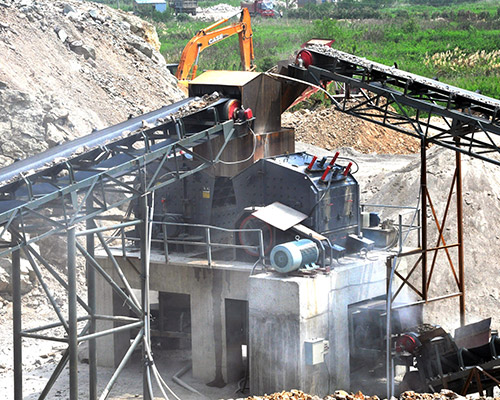
Ideal Materials for Impact Crushing
Impact crushers are most effective when processing materials with low to medium abrasiveness. The “impact” principle excels at creating a superior, cubic product shape, which is highly sought after in high-grade concrete and asphalt production.
1. Soft to Medium-Hard Rocks
Materials like Limestone, Gypsum, Coal, and Calcite are the “gold standard” for impact crushers. These rocks break easily along natural cleavage planes, resulting in high reduction ratios and minimal wear on the blow bars.
2. Non-Abrasive Recycled Materials
Impact crushers are the preferred choice for construction waste (concrete) and asphalt recycling. They can easily separate rebar from concrete and produce clean, reusable aggregates.
3. Specific Hard Rocks (With Advanced Metallurgy)
While historically limited to soft rock, modern machines like Liming’s CI5X Series Impact Crusher can handle medium-hard materials like Basalt or Granite, provided the silica content is not excessively high, thanks to high-chromium blow bar technology.
Addressing the 3 Core Pain Points of Impact Crushing
Even if your material is “suitable,” poor operation can lead to these common industry headaches. Here is how Liming provides the solution:
- Pain Point 1: Excessive Wear of Blow Bars.
Liming Solution: We use high-chromium wear-resistant materials and a heavy-duty rotor design. Our blow bars are reversible, effectively doubling their service life before a replacement is needed. - Pain Point 2: High Dust and Environmental Non-Compliance.
Liming Solution: Impact crushers naturally create more fines. Liming machines feature multi-layer sealing structures and integrated spray systems to suppress dust at the source. - Pain Point 3: Poor Gradation and “Over-Crushing”.
Liming Solution: Our hydraulic adjustment system allows operators to precisely control the gap between the impact plate and the blow bar, ensuring the output size stays within the target range without producing excess waste powder.
Social Proof: 300TPH Limestone Plant in Southeast Asia
Real-world results prove the suitability of impact technology for large-scale operations.
Project Site Overview
- Location: East Java, Indonesia
- Processed Material: Medium-hard Limestone
- Production Capacity: 300 Tons Per Hour (t/h)
- Core Configuration: CI5X1520 Impact Crusher, GZD1300x4900 Vibrating Feeder, 3YZS2160 Vibrating Screen.
Performance: The client achieved a 95% cubicity rate for their 10-20mm aggregate, meeting the strict requirements for local toll road construction. Maintenance costs remained 15% lower than the regional average due to the optimized rotor speed.
Expert Advice: A Message from a 20-Year Engineer
“In my 20 years of commissioning plants, I’ve seen many owners choose an impact crusher for high-silica granite just because it’s cheaper upfront than a cone crusher. Don’t make that mistake.“
If your material has a silica content higher than 10-12%, the wear on your blow bars will eat your profits in weeks. Use impact crushers for their strength: shaping. If you must process hard rock, use a Jaw crusher for primary, a Cone for secondary, and a Liming Impact Crusher as a ‘shaper’ in the tertiary stage. This hybrid approach gives you the best shape with the lowest wear cost.”
— Chief Technical Officer, Liming Heavy Industry
FAQ: Understanding Material Suitability
Is moisture content a factor for impact crushers?
Yes. If material moisture exceeds 8-10%, it can become sticky and clog the crushing chamber or the discharge chute. For wet materials, we recommend specialized heating or drying systems, or opting for a different crushing method.
Can an impact crusher handle iron ore?
Generally, no. Iron ore is typically too hard and abrasive for a standard impact crusher. A Hydraulic Cone Crusher is significantly more efficient and cost-effective for metallic ores.
What is the maximum feed size for a Liming impact crusher?
This depends on the model. For example, our CI5X series can handle feed sizes up to 700mm in primary configurations, though they are most commonly used for secondary crushing with feed sizes around 100-300mm.
Why does impact crushing produce a better shape?
Because it uses high-speed kinetic energy to break the rock along its natural grain, rather than squeezing it. This eliminates internal stress cracks and results in cubic particles rather than flaky or elongated ones.
Conclusion: Choose the Right Tool for the Job
Understanding what materials are suitable for an impact crusher is the first step toward quarrying efficiency. For limestone, concrete, and medium-hard aggregates, the impact crusher is unmatched in product quality and reduction ratio.
Are you unsure if your material is a good fit? Send a sample to our laboratory! Liming Heavy Industry offers material testing and customized crushing circuit designs to ensure your investment delivers maximum returns.